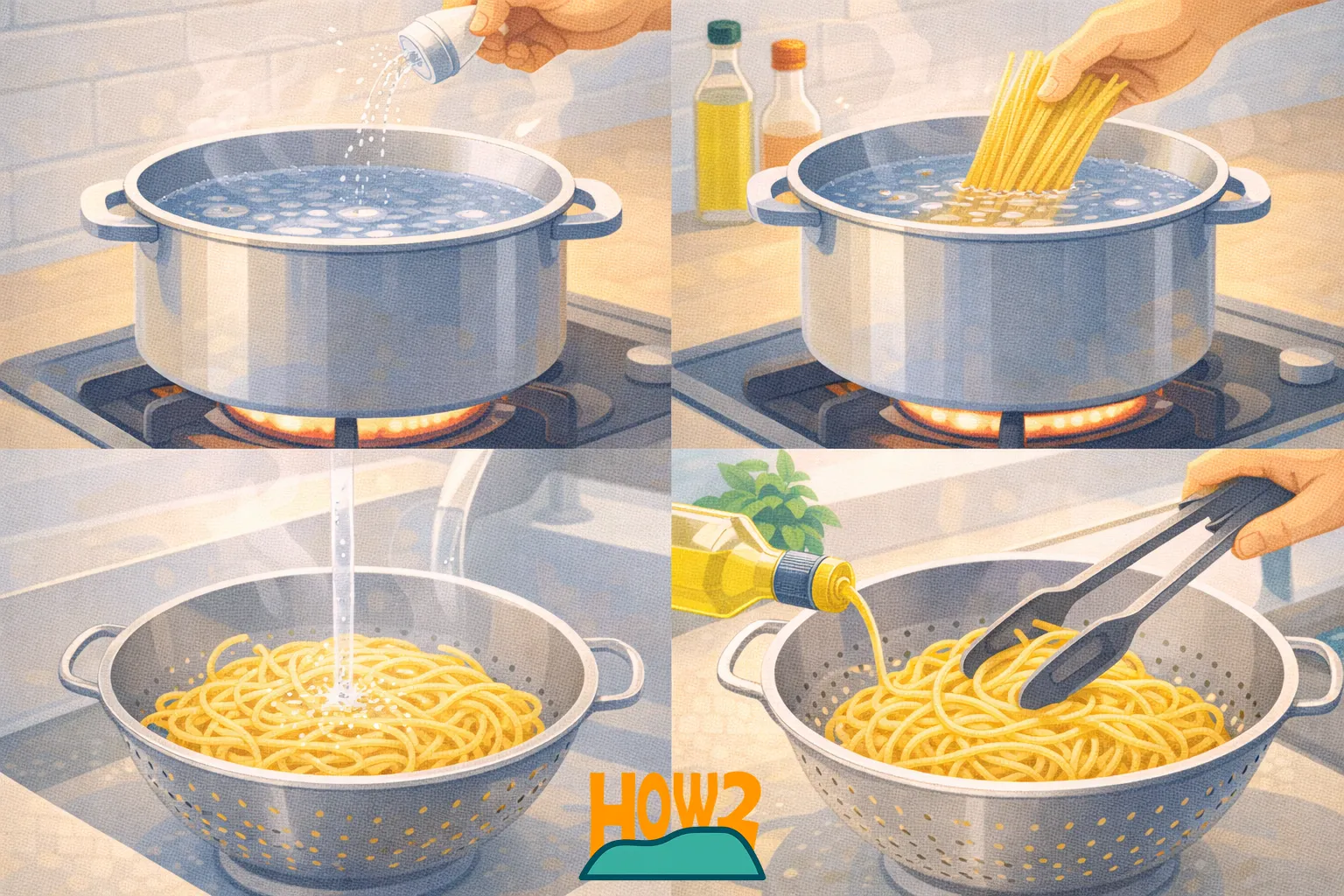

Introduction: Learn How to Cook Pasta That Isn’t Sticky
If you want to know how to Cook perfect, non-sticky pasta every time, this step-by-step guide will help. Many home cooks struggle with gummy, clumped pasta. Follow these clear steps to Cook pasta that remains separate, flavorful, and ready to marry your favorite sauce.
Why pasta gets sticky (and how to prevent it)
Pasta becomes sticky when surface starches gelatinize and act like glue. Common causes include too little water, not stirring, overcooking, or rinsing incorrectly. Understanding these reasons helps you learn how to Cook pasta without stickiness.
Key reasons pasta sticks
- Insufficient boiling water — pasta needs room to move.
- Not stirring early — pieces cling in the first minutes.
- Overcooking — releases more starch and becomes gummy.
- Rinsing at the wrong time — removes surface starch that helps sauce adhere (except for cold salads).
- Adding oil to the water — prevents sauce from sticking and can make texture slippery.
Step-by-step: How to Cook pasta that isn’t sticky
Follow these practical steps to Cook pasta that stays separate and al dente.
1. Use plenty of water
Fill a large pot with water. A simple rule is about 4–6 quarts (≈4–6 liters) per pound (≈450 g) of pasta — roughly 1 liter of water per 100 g of pasta. More water dilutes released starch and reduces sticking.
2. Salt the water generously
Add salt once the water boils: about 1–2 tablespoons per 4–6 quarts (adjust to taste). Salting the water seasons the pasta from the inside out and has no effect on stickiness, but it improves flavor and helps your sauce shine.
3. Bring to a full rolling boil, then add pasta
Make sure the water is at a vigorous boil. Add pasta gradually and stir immediately so pieces don’t stick together. Keep the boil lively — a strong boil keeps pasta moving and separate.
4. Stir early and often
Stir repeatedly for the first 1–3 minutes and then periodically as it cooks. This is one of the best ways to learn how to Cook non-sticky pasta: early stirring prevents clumps from forming.
5. Cook to al dente — test before the recommended time
Follow the package timing but start testing 1–2 minutes before the lower end. Bite a piece: it should be tender but still firm in the center. Overcooking increases starch release and stickiness.
6. Reserve starchy pasta water
Before draining, scoop out ½ to 1 cup (120–240 ml) of pasta cooking water. This starchy liquid helps you learn how to Cook a cohesive sauce without making pasta sticky — add small amounts to adjust texture and help sauce cling.
7. Drain, don’t rinse (unless making a salad)
Drain the pasta quickly—don’t rinse. Rinsing removes starch that helps sauce stick. The only time to rinse is when making a cold pasta salad or if you need to stop cooking immediately for a recipe that requires cooled noodles.
8. Toss immediately with sauce
To fully master how to Cook non-sticky pasta, finish it in the pan with your sauce over low heat for 1–2 minutes. Add a splash of reserved pasta water to emulsify the sauce and coat the noodles evenly. This step prevents sticky clumps and produces a silky finish.
Quick checklist: How to Cook perfect pasta
- Use plenty of boiling water.
- Salt the water well.
- Stir in the first minutes and occasionally while cooking.
- Cook to al dente — test early.
- Reserve pasta water before draining.
- Do not rinse unless making a cold dish.
- Toss with sauce immediately and use pasta water to finish.
Common mistakes and how to fix them
- Mistake: Using too little water. Fix: Use a larger pot next time and follow the 1 L per 100 g rule.
- Mistake: Overcooking. Fix: Stop cooking 1–2 minutes early and finish in the sauce.
- Mistake: Adding oil to the water. Fix: Skip the oil; instead, toss with olive oil or sauce after draining if needed.
- Mistake: Rinsing hot pasta. Fix: Only rinse for cold salads; otherwise keep the starch to bind the sauce.
Tips for different pasta types
- Long pasta (spaghetti, linguine): Stir well when adding to water so strands don’t clump.
- Short shapes (penne, fusilli): Still stir early; shapes can hide starch and stick together when crowded.
- Fresh pasta: Uses less cooking time. Cook gently and toss quickly with sauce to avoid stickiness.
Conclusion: Master how to Cook non-sticky pasta
Knowing how to Cook pasta that isn’t sticky comes down to water, salt, stirring, timing, and finishing in the sauce. Follow these steps and tips to transform sticky results into perfectly separated, saucy, delicious pasta every time.
Quick reminder
Use plenty of boiling water, stir, reserve pasta water, and toss with sauce — that’s the simple secret to learn how to Cook pasta that isn’t sticky.