
Why a 10-Minute Daily Practice Works
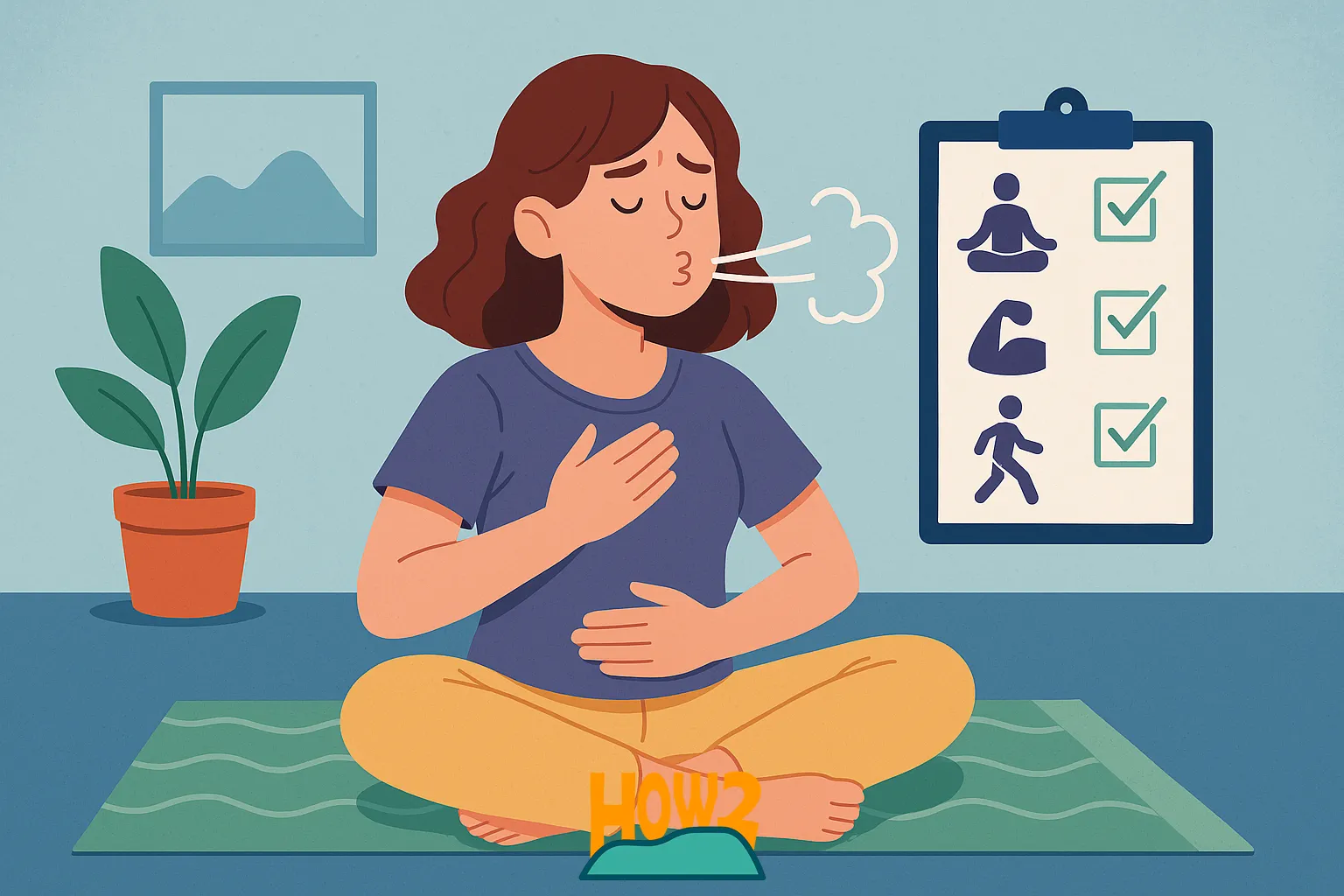
Small, consistent actions often beat occasional marathon efforts. A focused 10-minute daily practice trains your nervous system to shift out of fight-or-flight, lowers baseline stress, and builds mental resilience. For many people, a short routine is easier to stick with than longer sessions—making meaningful change more likely.
A Simple, Science-Backed 10-Minute Routine
Below is a step-by-step routine that combines breathing, movement, mindfulness, and a brief cognitive reset. You can follow it exactly or adapt elements to fit your needs.
Minute 0–1: Prepare and Set an Intention
-
Sit or stand comfortably. Set a timer for 10 minutes. Decide on a short intention like “calm,” “clarity,” or “I am safe.”
-
Close your eyes or soften your gaze to limit distractions.
Minute 1–4: Box Breathing (or 4-4-4)
-
Inhale for 4 counts, hold for 4, exhale for 4, hold for 4 (box) — repeat for 3 cycles. If 4 feels long, try 3-3-3 or 4-4-4 with no holds.
-
Breathing slowly and evenly signals the parasympathetic nervous system to calm your body and reduce anxiety symptoms.
Minute 4–7: Quick Body Scan / Progressive Muscle Relaxation
-
Scan from the top of your head to your toes. Notice tension spots. Tighten each muscle group for 3–5 seconds, then release and breathe out. Move down the body—forehead, jaw, shoulders, hands, chest, belly, hips, legs.
-
This releases stored tension and anchors attention in the body rather than anxious thoughts.
Minute 7–9: Grounding or 5-4-3-2-1 Technique
-
Use your senses to name: 5 things you can see, 4 things you can touch, 3 things you can hear, 2 things you can smell, 1 thing you can taste or one breath. This brings you into the present moment.
Minute 9–10: Gratitude or Cognitive Reframe
-
Spend the last minute naming one thing you’re grateful for or reframing a worry into a manageable action. Example: change “I can’t handle this” to “I can take one step right now.”
Alternative 10-Minute Options
If the above routine doesn’t fit your preference, try one of these alternatives:
- Meditation-focused: 10 minutes of guided mindfulness meditation.
- Movement-focused: Gentle yoga or a short walk with mindful breathing.
- Journaling-focused: 5 minutes of free-write about worries, 5 minutes listing solutions or next steps.
Tips to Make It Stick
- Same time: Anchor the practice to a daily habit (morning coffee, lunch break, bedtime).
- Use a cue: Set a phone alarm with a calm tone or place a sticky note reminder.
- Track progress: Mark days on a calendar or use a habit app—consistency builds results.
- Be flexible: If you miss a day, return without judgment. Even short practices help.
What to Expect and When to Seek Help
After a few weeks of daily practice you may notice reduced reactivity to stress, improved sleep, and clearer thinking. However, if anxiety interferes with daily functioning—work, relationships, or safety—seek a mental health professional. A 10-minute practice is a helpful tool, not a substitute for therapy or medication when those are needed.
Quick Start Checklist
- Set a timer for 10 minutes.
- Begin with breathing (1–4 minutes).
- Do a short body scan or muscle relaxation (3 minutes).
- Ground with your senses (2 minutes).
- End with gratitude or a small actionable reframe (1 minute).
Final Thought
Reducing anxiety doesn’t require long sessions or special equipment—10 focused minutes a day is powerful. Start small, be consistent, and adjust the routine to what feels most calming and sustainable for you.