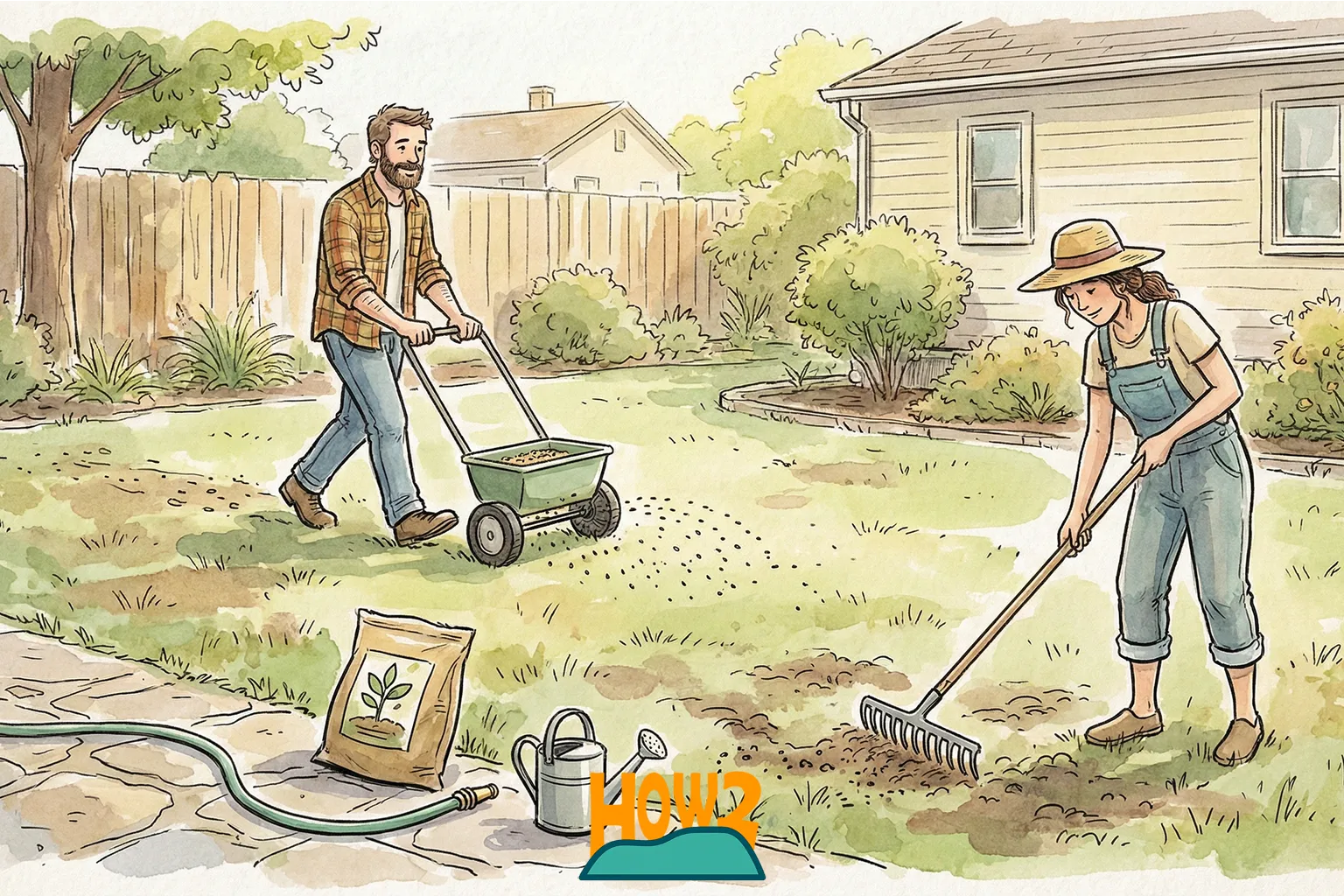

Why Reseed a Lawn?
Reseeding (or overseeding) rejuvenates thin, patchy turf, improves disease resistance, and fills in bare spots after pests, drought, or heavy use. Whether you’re restoring an entire yard or revitalizing a few worn areas, reseeding is one of the most cost-effective ways to get a fuller, healthier lawn.
When Is the Best Time to Reseed?
Timing depends on your grass type and climate:
- Cool-season grasses (fescue, ryegrass, bluegrass): Early fall is ideal — cooler temperatures and autumn rains help seedlings establish. Late summer (late August–September) is a close second.
- Warm-season grasses (bermudagrass, zoysia): Late spring to early summer when soil temperatures are warm encourages fast germination and growth.
Tools and Materials You’ll Need
- Grass seed suited to your climate and existing lawn
- Rake (garden or leaf rake)
- Aerator (manual or mechanical) for compacted lawns
- Topsoil, compost, or seed starter mix (optional but helpful)
- Starter fertilizer or soil amendment (follow local regulations)
- Spreaders (handheld or broadcast) for even seed distribution
- Garden hose with a fine sprinkler or irrigation system
- Mulch or straw for erosion-prone slopes (optional)
Step-by-Step Reseeding Process
-
Assess the Lawn
Identify bare spots, thin areas, soil compaction, drainage problems, and shade levels. This will guide your seed choice and preparation steps.
-
Choose the Right Seed
Match seed to your climate and existing grass. Use a blend or mix if your lawn has multiple species. Check the label for germination time and recommended seeding rate. When in doubt, consult your local extension or garden center for local varieties.
-
Prepare the Soil
Proper preparation is vital for good seed-to-soil contact:
- Mow low and remove clippings if necessary.
- Rake out debris and loosen the top 1/4–1/2 inch of soil in bare spots.
- For compacted areas, aerate the lawn to improve water and root penetration.
- Add a thin layer (1/4–1/2 inch) of compost or good-quality topsoil to improve seedbed conditions if the existing soil is poor.
-
Spread the Seed
Distribute seed evenly using a spreader. For small patches, hand-seeding with careful coverage works. Follow the seed bag’s recommended rate; typical overseeding rates vary by grass type and seed purity.
-
Work Seed Into the Soil
Lightly rake the seeded areas so seeds make good contact with soil. For larger areas, a lawn roller can press seeds into place (do not compact the soil too much).
-
Apply Starter Fertilizer (Optional)
If your soil test indicates low nutrients, apply a starter fertilizer formulated for new seed. Be mindful of local fertilizer regulations and avoid overapplication.
-
Mulch and Protect
In exposed or sloped areas, a thin layer of straw or a seed mulch helps retain moisture and prevents erosion. Avoid smothering seeds — use light, airy straw.
-
Water Properly
Consistent moisture is critical during germination and early growth:
- First 2 weeks: Keep the top 1/4–1/2 inch of soil consistently moist. Light, frequent watering (2–4 times daily in hot weather) is common for seedbeds.
- Weeks 3–6: Reduce frequency but increase run time to encourage deeper roots (water once daily or every other day, depending on weather).
- After 6–8 weeks: Shift to deeper, less frequent watering (1–2 times per week) to build drought tolerance.
-
Mow When Ready
Let new grass reach 3–4 inches before the first mow and only remove the top one-third of blade height. Keep mower blades sharp to avoid tearing young grass.
-
Avoid Heavy Traffic
Limit foot traffic for at least 6–8 weeks so seedlings can establish strong roots.
Overseeding vs. Full Reseed
Decide based on how damaged your lawn is:
- Overseeding: Spreading seed over an existing lawn to thicken turf and improve density. Best for mostly healthy lawns with thin patches.
- Full reseed or renovation: Remove the existing lawn (or kill it with solarization or herbicide), prepare the soil, then seed an entirely new lawn. Choose this when turf is mostly dead or dominated by weeds.
Common Mistakes to Avoid
- Not preparing the soil — seeds need good contact with soil.
- Overwatering or underwatering — both hurt germination and root growth.
- Using the wrong seed for your climate or light conditions.
- Mowing too early or scalping new grass.
- Ignoring pests, weeds, or drainage problems that will undermine new growth.
Maintenance After Establishment
- Fertilize according to soil test recommendations — avoid heavy nitrogen immediately after seeding unless a starter formula is used.
- Continue to mow regularly, following the one-third rule (never cut more than one-third of blade height).
- Aerate annually if your lawn is compacted.
- Spot-seed thin areas in the following season as needed.
Cost and Time Considerations
Costs depend on seed quality, size of the area, and whether professional services are used. Most homeowners can reseed a small yard in a weekend. Expect full establishment to take 6–12 weeks, depending on grass type and weather.
FAQ
How long does it take for grass seed to germinate?
Germination time varies by seed type: perennial ryegrass can sprout in 5–10 days, fescues 7–21 days, and bluegrass 14–30 days. Soil temperature and moisture largely control germination speed.
Can I reseed my lawn in spring?
Yes, spring reseeding works, especially for cool-season grasses if done early enough to avoid summer heat. However, early fall is usually the best time for cool-season lawns because seedlings face cooler, steadier conditions.
Do I need to fertilize after reseeding?
A starter fertilizer can help, but it’s best to base fertilizer use on a soil test. Some regions limit phosphorus use; follow local guidelines and label directions.
Should I use a seed blanket or mulch?
Seed blankets or light straw mulch help retain moisture and protect seeds from birds and erosion. They’re especially useful on slopes or in windy areas.
What if new grass isn’t filling in?
Check for poor seed-to-soil contact, shallow watering, soil crusting, pests, or disease. You may need to add more seed to thin spots, improve irrigation, or amend the soil.
How often should I water newly seeded areas?
Keep the surface consistently moist during germination with light, frequent watering. As seedlings grow, gradually reduce frequency and increase duration to promote deeper root development.
With the right timing, good preparation, and consistent care, reseeding is an effective way to restore a lush, healthy lawn. Start small if you’re new to lawn renovation, and adjust based on your lawn’s response and local conditions.