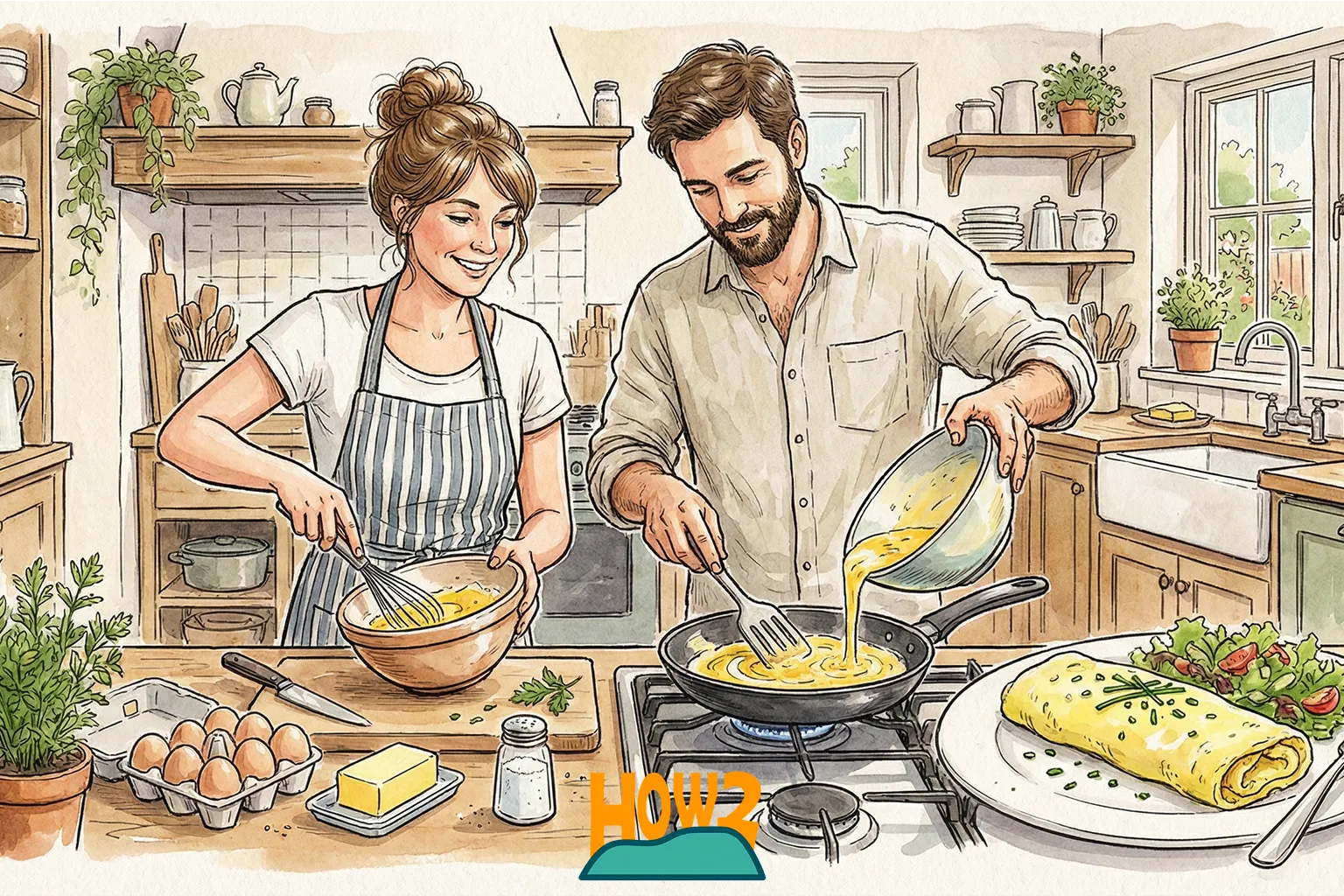

Introduction: What Is a French Omelette?
A French omelette is a simple, elegant dish known for its smooth, silky exterior and slightly custardy interior. Unlike American-style omelettes that are browned and stuffed, the classic French omelette is cooked gently and rolled to create a tender, unbrowned surface. Mastering this technique gives you a versatile base for herbs, cheese, or delicate fillings.
Ingredients and Tools
Ingredients (serves 1)
- 3 large eggs (cold from the fridge or room temperature — either works)
- 1 tablespoon unsalted butter
- Salt and freshly ground black pepper, to taste
- 1 tablespoon of finely chopped fresh herbs (optional: chives, parsley, tarragon)
- 1-2 tablespoons grated cheese or a small slice of crème fraîche (optional)
Tools
- 8–10 inch nonstick or well-seasoned stainless steel skillet
- Rubber spatula or wooden spoon
- Bowl and fork or whisk
- Plate for rolling and serving
Step-by-Step: How to Make a French Omelette
Follow these steps for a tender, slightly runny-centered French omelette.
- Beat the eggs: Crack 3 eggs into a bowl. Add a pinch of salt and beat lightly until yolks and whites are combined but not frothy—you’re aiming for an even yellow mixture.
- Heat the pan: Place your skillet over medium-low heat. Add butter and let it melt slowly until it foams. The butter should be warm but not browning.
- Cook gently: Pour the beaten eggs into the pan. Let them sit 5–10 seconds to begin setting at the edges.
- Stir and shake: Using a rubber spatula, stir the eggs in small circles while simultaneously shaking the pan with your other hand. This keeps the eggs moving and creates fine curds. Continue until eggs are mostly set but still slightly wet on top—this usually takes 45–60 seconds depending on heat.
- Add fillings (optional): If using herbs or cheese, sprinkle them over the eggs now. Avoid heavy fillings that will weigh down the omelette.
- Smooth and fold: Tilt the pan to gather the eggs toward one side. Use the spatula to smooth the surface into a neat oval. Fold one-third of the omelette over the center, then fold the other third, or roll it into a cylinder. The goal is a compact shape with a creamy interior.
- Finish and serve: Slide the omelette onto a warm plate seam-side down. Pat the top gently to shape it and add a small knob of butter or a sprinkle of herbs. Serve immediately.
Texture and Timing Tips
- Keep heat low to prevent browning. The classic French omelette is pale, with no browning on the surface.
- The interior should be slightly custardy—avoid cooking until fully dry.
- Practice the wrist motion of shaking the pan and stirring with the spatula; it controls curd size and texture.
- If the exterior sets too quickly, lower the heat and remove the pan from direct heat briefly while stirring.
Common Mistakes and How to Fix Them
- Overcooked and dry: Lower the heat, remove the pan from heat a few seconds before it looks done, and let residual heat finish the cooking.
- Brown spots: Your pan is too hot. Reduce to medium-low and use more butter to insulate the eggs.
- Heavy or collapsed omelette: Avoid bulky fillings. Use small amounts of soft cheese or herbs.
Variations and Serving Ideas
- Herb omelette: Fold in chives, parsley, or tarragon for a classic French flavor.
- Cheese omelette: Use a small amount of grated Gruyère or Comté for richness.
- Light filling: Add lightly sautéed mushrooms or spinach—make sure they’re dry before adding.
- Serve with: simple green salad, toasted baguette, or roasted tomatoes for a balanced meal.
Quick Troubleshooting Guide
- If eggs stick: Use a good nonstick pan and enough butter. A well-seasoned pan helps too.
- If you can’t roll neatly: Try folding in thirds instead of rolling, or practice with smaller 2-egg omelettes first.
- Want faster results: Use medium heat but be ready to remove from heat sooner to avoid browning.
FAQ
What’s the best pan for a French omelette?
An 8–10 inch nonstick skillet or a well-seasoned stainless steel pan with a comfortable handle works best. Nonstick gives the most consistent results for beginners.
How many eggs should I use?
Three eggs is classic for one serving. Use two eggs for a smaller portion or four if you want a larger omelette for two people.
Should I beat the eggs with milk or water?
For a classic French omelette avoid milk or water. Beating the eggs alone preserves the silky texture. A small splash of water can create steam and a slightly fluffier texture, but it’s not traditional.
How do I keep the omelette from browning?
Cook over low to medium-low heat, use enough butter, and keep the eggs moving until they’re nearly set. Remove from heat just before they look fully cooked—the residual heat will finish them.
Can I prepare the omelette ahead?
French omelettes are best served immediately. They lose their delicate texture if kept warm for long. If you must hold one, cover loosely and serve within a few minutes.
Final Thoughts
Making a French omelette takes a little practice, but the technique is simple: low heat, constant motion, and gentle shaping. Start with the basic recipe, focus on texture rather than fillings, and you’ll soon be rolling perfect, tender omelettes at home.