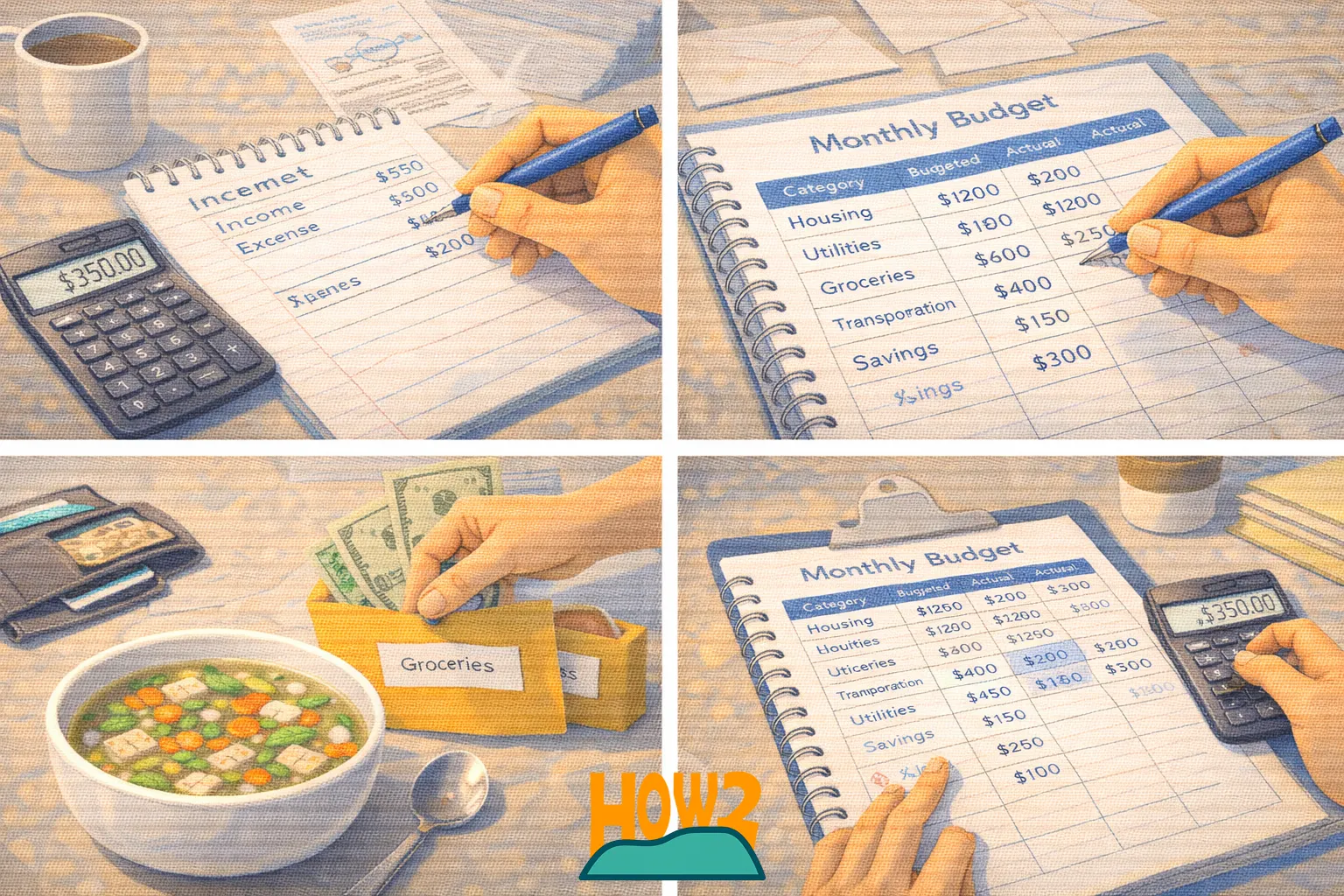

Introduction: Why create a monthly budget?
Learning how to create a monthly budget step by step gives you control over your money, reduces stress, and helps you reach goals faster—whether it’s paying off debt, saving for a house, or simply having more reliable cash flow at the end of the month. This guide walks you through clear, actionable steps and offers practical tips for real-life situations.
Step-by-step: How to create a monthly budget
Step 1 — Gather your financial information
Start by collecting the key numbers you’ll need:
- Monthly take-home income (after taxes and deductions)
- Fixed expenses: rent/mortgage, insurance, subscriptions, loan payments
- Variable expenses: groceries, gas, utilities, dining out, entertainment
- Irregular or annual expenses: car maintenance, gifts, holiday costs
- Current balances: checking, savings, credit cards
Step 2 — Calculate total monthly income
Add all reliable income you expect in a month. If your income is irregular (freelance, commissions), use a 3–6 month average or set a conservative baseline to budget from.
Step 3 — List and categorize monthly expenses
Break expenses into categories and separate needs from wants:
- Needs: housing, utilities, groceries, transportation, insurance
- Wants: dining out, streaming, hobbies
- Financial goals: savings, emergency fund, debt repayment
Step 4 — Choose a budgeting method that fits your life
Pick a method that you can realistically stick to:
- Zero-based budget: Every dollar is assigned a job—income minus expenses equals zero.
- 50/30/20 rule: 50% needs, 30% wants, 20% savings/debt.
- Envelope or cash system: Cash for each spending category to limit overspending.
- Percentage budgets: Allocate specific percentages to categories (useful for irregular income).
Step 5 — Assign amounts and prioritize goals
Start by covering needs and minimum debt payments. Then prioritize an emergency fund and high-interest debt. Allocate remaining income to wants and longer-term goals. If expenses exceed income, cut or reduce discretionary categories first.
Step 6 — Track and record every expense
Track spending daily or weekly for the first month. Use a simple spreadsheet, budgeting app, or even a notebook. Accurate tracking reveals leaks and helps you make informed adjustments.
Step 7 — Review and adjust monthly
At the end of each month, compare actual spending to your plan. Ask:
- Which categories went over or under?
- Can any spending be reduced or automated?
- Are your goals still realistic?
Make small changes and repeat the process next month.
Practical examples and a simple template
Example monthly budget for $3,500 take-home pay:
- Rent/mortgage: $1,050 (30%)
- Utilities & internet: $210 (6%)
- Groceries: $350 (10%)
- Transportation: $280 (8%)
- Insurance & medical: $175 (5%)
- Debt repayment: $350 (10%)
- Savings (emergency & goals): $525 (15%)
- Discretionary (dining, entertainment): $560 (16%)
Use this structure in a spreadsheet with columns: Category, Budgeted, Actual, Difference. Adjust percentages to match your priorities.
Budgeting tips for common situations
If you have irregular income
Create a baseline using your lowest monthly average, build a larger emergency fund (3–6 months), and save extra income as a buffer for leaner months.
If you’re paying down debt
Prioritize high-interest debt. Consider the snowball method (smallest balance first) for motivation or the avalanche method (highest interest first) to save on interest.
If you live with family or roommates
Agree on shared expenses in writing. Use tools to split bills and track who owes what to avoid friction.
Tools and apps that make budgeting easier
- Spreadsheets: Google Sheets or Excel templates
- Apps: Mint, YNAB (You Need A Budget), EveryDollar, PocketGuard
- Automation: set up automatic transfers to savings and bill autopay
Common pitfalls and how to avoid them
- Not tracking small purchases: they add up—track them.
- Setting unrealistic budgets: be honest and flexible.
- Forgetting irregular expenses: list annual costs and divide by 12 to budget monthly.
- Ignoring emotional spending: identify triggers and replace habits (walk, hobby, delay purchases).
Quick checklist: Start your first monthly budget today
- Gather last 1–3 months of bank and bill statements
- Calculate average monthly income
- List fixed and variable expenses
- Choose a budgeting method and set priorities
- Track expenses and review at month end
Conclusion
How to create a monthly budget step by step becomes simple when you break it down: know your income, list expenses, choose a method, assign dollars, track, and adjust. Start with one small change—like automating savings or tracking coffee purchases—and build momentum. A realistic, repeatable budget is the clearest path to financial confidence.
FAQs
How long does it take to create a monthly budget?
Initial setup can take 1–2 hours if you gather documents first. Monthly check-ins should take 15–30 minutes once you’re tracking spending.
What if I overspend one month?
Don’t panic. Reallocate next month or cut discretionary spending. Use overspending as data to refine your budget.
How much should I save each month?
A common target is 20% of take-home pay, but start with what’s realistic and increase over time. Prioritize building a 3–6 month emergency fund.