
Why an evening routine matters
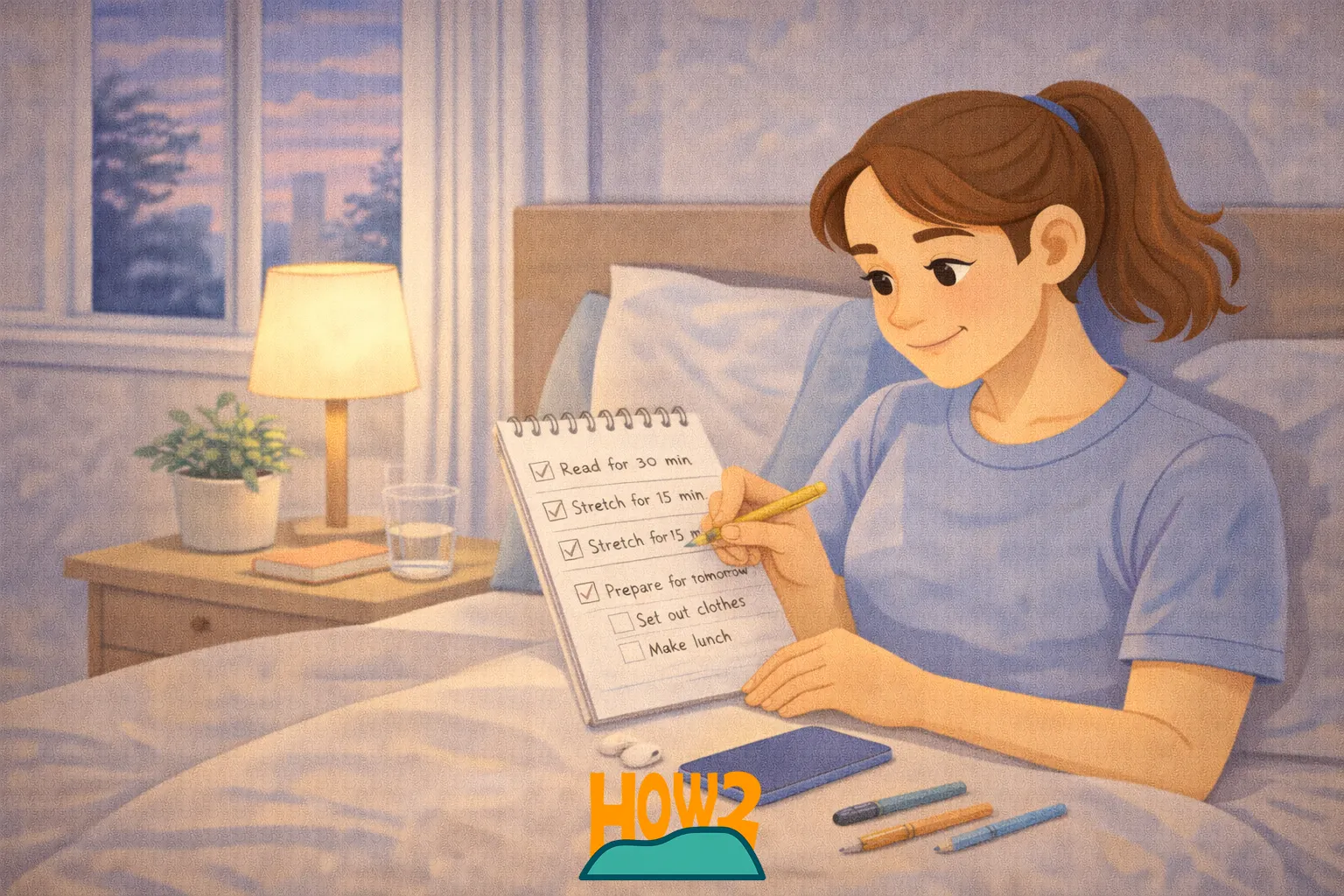
An evening routine is a predictable sequence of small actions you do before bed to relax, reset, and prepare for the next day. It helps your body and mind know when to wind down, reduces stress, improves sleep quality, and makes mornings easier. If you’re asking how to build an evening routine step by step, this guide breaks it down into simple, practical moves you can start tonight.
How to build an evening routine step by step
-
Step 1: Define your main goal
Decide what you want from your evening routine. Common goals include getting better sleep, reducing anxiety, having a calmer morning, or finishing small tasks for tomorrow. Your goal will shape the activities you choose.
-
Step 2: Audit your current evenings
Write down what you usually do from dinner to bedtime for 3 nights. Note screen time, snacking, chores, and how long it takes to fall asleep. This audit shows habits to keep, tweak, or remove.
-
Step 3: Choose a consistent bedtime and wind-down window
Pick a target bedtime that fits your schedule and allows enough sleep. Then create a wind-down period of 30 to 90 minutes before that time. Consistency is key for your circadian rhythm.
-
Step 4: Pick calming activities
Fill your wind-down window with 2 to 4 low-effort, calming activities. Examples include reading, light stretching, journaling, mindfulness, or a warm shower. Avoid intense workouts, heavy meals, and emotionally charged conversations.
-
Step 5: Do a simple next-day prep
Spend 5 to 10 minutes preparing tomorrow: pick an outfit, pack a bag, write a short to-do list, or prep breakfast. This reduces morning friction and nighttime worry.
-
Step 6: Set a digital boundary
Limit screens at least 30 to 60 minutes before bed. Use night mode, set app timers, or place devices in another room. If you need music or meditation, use a timer and avoid social feeds.
-
Step 7: Create a sleep-friendly environment
Make your bedroom cool, dark, and quiet. Use blackout curtains, earplugs, a white noise machine, or an eye mask. Reserve your bed for sleep and intimacy, not work or scrolling.
-
Step 8: Track and tweak
Try the routine for 2 weeks, track mood and sleep quality, then adjust. Start small: adopt one or two changes at a time so the new routine sticks.
Sample evening routines you can copy
For better sleep (45 minutes)
- 9:00 PM light dinner finish
- 9:30 PM 20 minutes gentle yoga or stretching
- 9:50 PM 10 minutes journaling or gratitude list
- 10:05 PM 15 minutes reading with dim light
- 10:30 PM lights out
For busy parents (30 minutes)
- 8:30 PM quick tidy and lunchbox prep
- 8:45 PM family wind-down: low-key play or story time
- 9:00 PM 10 minutes of personal care and 10 minutes planning tomorrow
For productivity next day (40 minutes)
- 10:00 PM review and finalize tomorrow’s top 3 tasks
- 10:10 PM set clothes and prep work bag
- 10:20 PM 20 minutes relaxing activity like meditation
How to stick with it
- Start tiny: change one habit at a time.
- Habit stack: attach a new habit to an existing one, like 5 minutes journaling after brushing teeth.
- Be consistent: aim for the routine even on weekends to keep your rhythm steady.
- Use gentle reminders: alarms, habit-tracking apps, or a sticky note by the bed.
- Forgive slip-ups: miss a night and start again tomorrow without guilt.
Common pitfalls and fixes
- Problem: I fall asleep scrolling. Fix: Move your phone away and use an alarm clock for the morning.
- Problem: My partner has a different schedule. Fix: Build a shared mini-routine for overlap and separate windows for individual needs.
- Problem: I can’t wind down because my brain is busy. Fix: Do a 5-minute brain dump or worry journal before bed.
Tools and apps that help
- Sleep trackers: to notice patterns and improvements.
- Habit apps: to set streaks and reminders.
- White noise and meditation apps: for guided wind-downs.
Final thoughts
Building an evening routine step by step is about small, consistent choices that tell your body it can relax. Define a clear goal, choose a wind-down window, pick calming activities, and prepare for tomorrow. Start small, track progress, and tweak until the routine fits your life. Try one change tonight and see how it feels tomorrow morning.