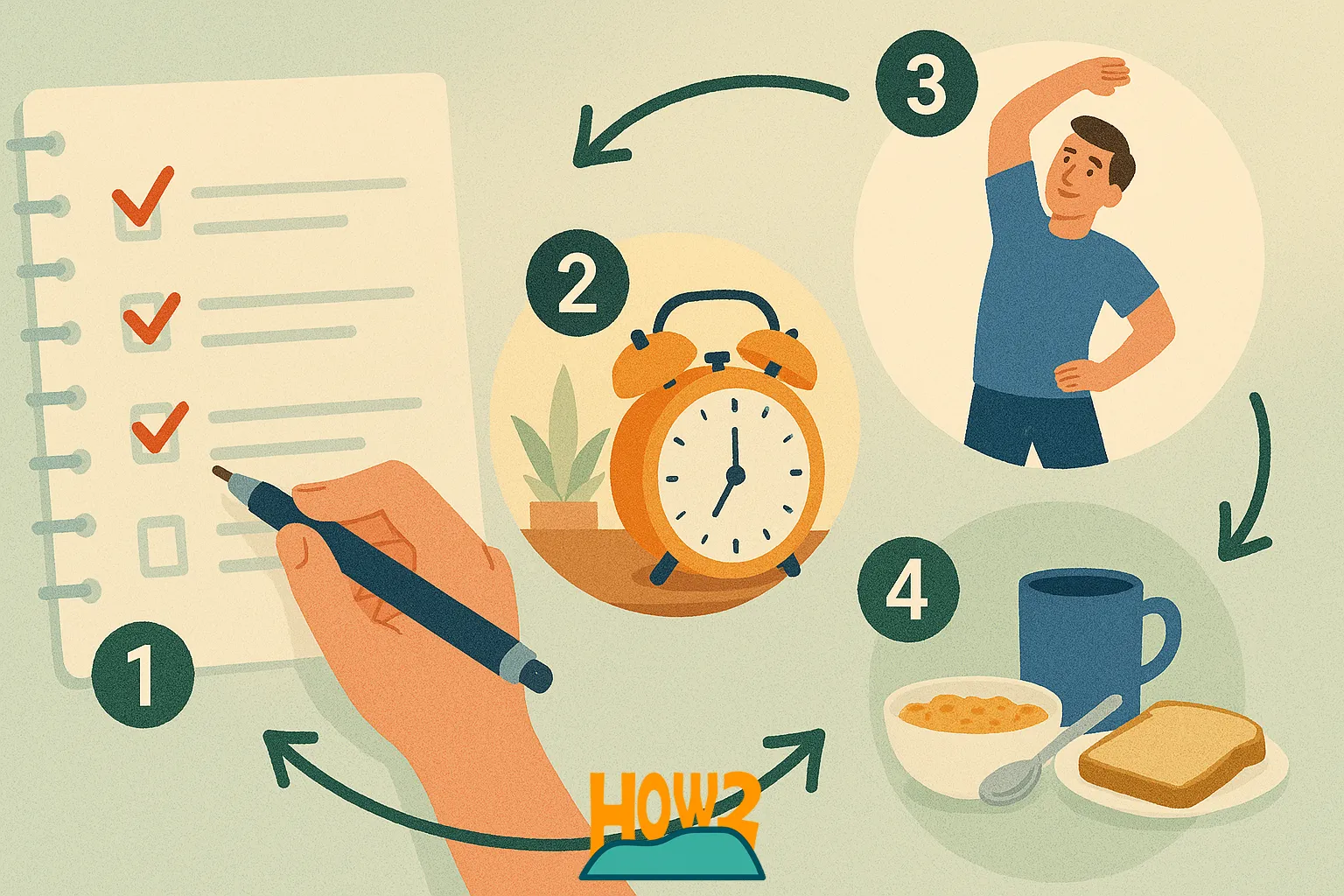

Why a morning routine matters
A consistent morning routine sets the tone for your entire day. It reduces decision fatigue, increases focus, and helps you start with intention rather than reaction. Whether you’re aiming for productivity, calm, or better health, a step-by-step morning routine helps you get there reliably.
Step-by-step: Build your morning routine
1. Define your goal
Start by asking: what do I want from a morning routine? Common goals include increased energy, calmer mornings, more productivity, or time for fitness. Your goal will determine which activities to prioritize.
2. Choose a consistent wake time
Pick a wake time that supports your goals and fits your schedule. Consistency matters more than an early hour. Aim to wake up within the same 30-minute window every day — including weekends when possible.
3. Prepare the night before
- Lay out clothes, prepare lunch or breakfast basics, and set your work bag by the door.
- Limit screens 30–60 minutes before bed and set a bedtime that gives you enough sleep.
- Create a simple to-do list for the next day so you reduce morning decision-making.
4. Start with hydration and sunlight
Drink a glass of water within the first 15 minutes to rehydrate. Open a curtain or step outside for natural light — sunlight helps reset your circadian rhythm and boosts alertness.
5. Move your body
Even 3–10 minutes of light movement (stretching, yoga, or a quick walk) increases circulation and wakefulness. If you can, add a longer workout on some days to build energy and mood.
6. Practice a brief mindfulness or breathing routine
Spend 1–10 minutes on meditation, deep breathing, or journaling. This reduces stress and improves focus. Use guided apps or a simple breathing pattern like 4-4-4 if you’re starting out.
7. Do one high-value task (the MIT)
Identify your Most Important Task (MIT) and work on it before checking email or social media. Even 20–45 minutes of focused work in the morning can yield huge gains in productivity.
8. Eat a balanced breakfast and complete hygiene
Choose protein, healthy fats, and whole grains to sustain energy. Include a quick hygiene routine (shower, brush teeth) to feel refreshed and presentable for the day.
9. Limit early phone and social media use
Avoid email and social feeds for at least 30–60 minutes to protect your morning calm and focus. Use technology as a tool — not the first thing you check.
10. Track and tweak
Use a habit tracker, journal, or simple checklist to monitor consistency. After two weeks, review what’s working and adjust: drop items that feel forced and add things that energize you.
Sample routines by time available
10-minute routine (for very busy mornings)
- Drink water and open a window (1 min)
- Quick stretch or 3-minute bodyweight routine (3 min)
- 2 minutes of breathing or gratitude (2 min)
- Pick MIT and write it down (2 min)
- Basic hygiene or splash of water on face (2 min)
30-minute routine (balanced option)
- Hydrate + sunlight (3 min)
- 10-minute workout or yoga (10 min)
- 5 minutes meditation/journal (5 min)
- Write MIT + quick plan (5 min)
- Simple breakfast or snack (7 min; can overlap)
60-minute routine (in-depth)
- Hydrate + sunlight (5 min)
- 30-minute workout or run (30 min)
- 10-minute mindfulness or journaling (10 min)
- Shower + hygiene (10 min)
- Healthy breakfast while reviewing MIT (5–10 min)
Sample routines for different people
Busy parent (30 minutes before kids wake)
- Hydrate and open curtains (2 min)
- 7-minute bodyweight routine or yoga (7 min)
- 5-minute plan: MIT + prep kids’ items (5 min)
- Quick shower or face wash + breakfast prep (10–15 min)
Remote worker (focused start)
- Light movement and sunlight (10 min)
- 15–30 minutes focused on MIT before email (15–30 min)
- Short walk or breathing break, then regular workday (5–10 min)
Student (study-focused)
- Hydrate and 5-minute review of goals (5 min)
- 20–40 minutes of focused study/reading (20–40 min)
- Short exercise break and breakfast (10–15 min)
Athlete (performance morning)
- Hydration + mobility warm-up (10 min)
- Primary training session (30–90 min)
- Cool down, recovery nutrition, and planning (15–30 min)
Tips for building lasting habits
- Start small: add one change at a time. Small wins build momentum.
- Anchor new habits to an existing routine (e.g., after brushing teeth, meditate).
- Make it easy: prepare clothes and meals the night before.
- Use cues and rewards: visible checklist, habit tracker, or a small reward after completing a week.
- Be flexible: adapt routine to life changes and don’t punish occasional slips.
Troubleshooting common problems
“I’m too tired in the morning.”
Move your bedtime earlier gradually (15 minutes at a time). Limit caffeine after midday and reduce blue light exposure before sleep.
“I can’t stay consistent.”
Lower the barrier: shorten the routine so it feels doable. Track progress visually and pair the habit with something you already do.
“My mornings feel rushed.”
Prepare more the night before — pack lunches, set out clothes, and plan your MIT. Wake up 15 minutes earlier if possible.
Final checklist to get started today
- Decide one clear morning goal.
- Pick a wake time and bedtime that support it.
- Choose 3–5 activities for your morning and priority order.
- Prepare at night and track your progress for two weeks.
Build a routine that fits your life, not someone else’s ideal. Consistency and small improvements matter more than perfection. Try a version for one week, tweak it, and watch your mornings transform.