
Why Make Homemade Pizza?
Homemade pizza is an easy, customizable, and rewarding meal you can make for weeknights, family dinners, or weekend projects. Making pizza from scratch—dough, sauce, and toppings—lets you control flavor, texture, and ingredients for better taste and nutrition than many store-bought alternatives.
What You’ll Need
- Basic equipment: mixing bowl, baking sheet or pizza stone, rolling pin (optional), oven or grill
- Ingredients for dough: flour, water, yeast, salt, olive oil, sugar or honey (optional)
- Ingredients for sauce: canned tomatoes or passata, garlic, olive oil, salt, dried oregano or basil
- Toppings: mozzarella, Parmesan, fresh basil, vegetables, cured meats, or whatever you like
Step-by-Step Guide
1. Make the Dough (Basic 1-Tier Dough)
Ingredients:
- 3 1/2 to 4 cups (420–480 g) all-purpose flour
- 1 1/2 cups (360 ml) warm water (about 105–115°F / 40–46°C)
- 2 1/4 tsp (1 packet) active dry yeast
- 1 1/2 tsp salt
- 1 tbsp olive oil
Method:
- Proof the yeast: Stir yeast into warm water with a pinch of sugar. Wait 5–10 minutes until foamy.
- Mix dough: Combine flour and salt in a bowl. Add yeast mixture and olive oil. Mix until shaggy.
- Knead: Turn dough onto a floured surface and knead 8–10 minutes until smooth and elastic. (Or use a stand mixer with a dough hook for 5–7 minutes.)
- First rise: Place dough in an oiled bowl, cover with a towel or plastic wrap, and let rise 1–2 hours at room temperature until doubled.
- Divide and rest: Punch down, divide into 2–4 balls (depending on desired pizza size), and rest 20–30 minutes before shaping.
Make-Ahead & Shortcut Options
- No-knead dough: Mix ingredients, refrigerate overnight. Shape and bake the next day.
- Quick dough: Use instant yeast and a warm environment; smaller rise times (30–45 minutes) work for thinner crusts.
2. Prepare the Sauce
Simple and fresh tomato sauce:
- Sauté 1–2 minced garlic cloves in 1 tbsp olive oil for 30 seconds.
- Add a 14 oz can crushed tomatoes or passata, pinch of salt, 1/2 tsp sugar if needed, and 1 tsp dried oregano. Simmer 10–15 minutes to thicken. Cool before using.
Or use raw crushed tomatoes seasoned with salt, olive oil, and fresh basil for a lighter, fresher flavor.
3. Preheat the Oven
High heat yields crispy crust and blistered toppings. Preheat your oven as hot as it goes—450–500°F (230–260°C) or higher. Place a pizza stone or inverted baking sheet in the oven while preheating for 30–45 minutes to create a hot surface.
4. Shape the Dough
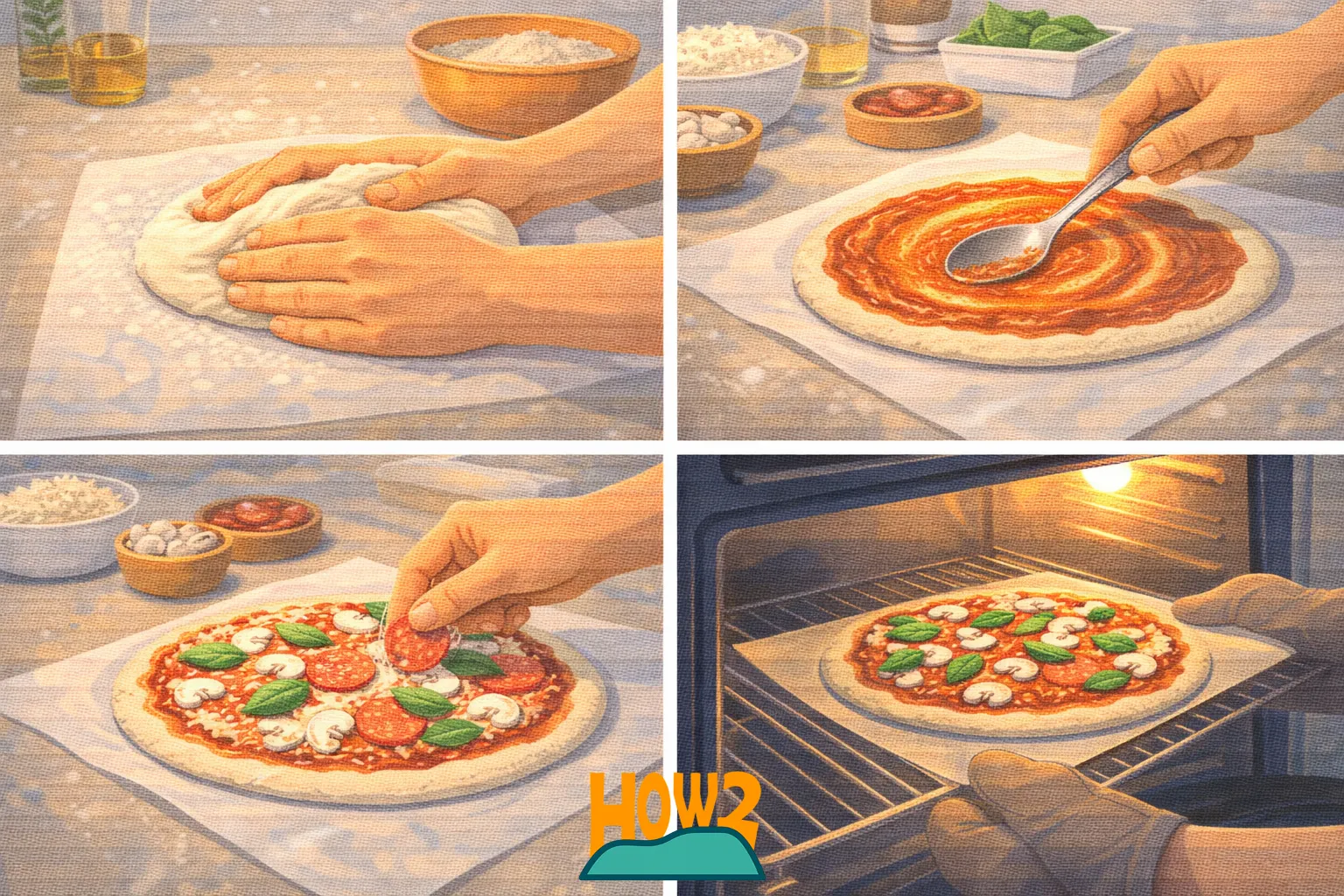
On a lightly floured surface, press and stretch each dough ball into a circle using your fingers, leaving a slightly raised edge for the crust. Avoid rolling too thin near the center. If using a peel, dust it lightly with cornmeal or flour.
5. Assemble the Pizza
- Place shaped dough on a floured peel or parchment-lined baking sheet.
- Spread a thin layer of sauce—less is more to avoid sogginess.
- Add shredded mozzarella or other cheeses, then toppings. Keep toppings balanced so the pizza cooks evenly.
- Finish with a drizzle of olive oil and a pinch of salt.
6. Bake
Slide the pizza onto the preheated stone or place the sheet in the oven. Bake 8–12 minutes at high heat until the crust is golden and cheese is bubbling and slightly browned. For a charred crust, broil 30–60 seconds at the end—watch carefully.
Alternative Cooking Methods
- Grill: Preheat grill to high, cook 2–3 minutes per side for a charred bottom and quick melt.
- Skillet/Cast Iron: Preheat skillet over medium-high, cook dough 2–3 minutes, flip, add toppings, then finish under a broiler or covered.
Finishing Touches and Serving
- Add fresh basil, arugula, or a sprinkle of Parmesan after baking.
- Let pizza rest 2–3 minutes before slicing—this keeps toppings from sliding off and allows cheese to set slightly.
Troubleshooting & Pro Tips
- Gummy center: Use less sauce, bake hotter, or roll dough thinner.
- Dense crust: Knead longer, or give a longer rise. Check yeast freshness.
- Too crisp/too dark top: Lower oven rack or reduce broil time.
- Stretching tips: Let dough rest if it springs back. Warm dough is easier to stretch.
Storage and Reheating
Store leftover pizza in the fridge for up to 3 days in an airtight container. Reheat in a skillet over medium heat with a lid for 3–5 minutes or in a 375°F oven for 6–8 minutes to restore crispness. Avoid microwaving if you want a crispy crust.
Quick Variations to Try
- Margherita: Tomato sauce, fresh mozzarella, basil, olive oil.
- Pepperoni & Mushroom: Shredded mozzarella, pepperoni, sautéed mushrooms.
- White Pizza: Olive oil, garlic, ricotta or mozzarella, spinach, and lemon zest.
- Veggie Delight: Grilled peppers, zucchini, onions, olives, and a sprinkle of feta.
Common Questions
Can I use whole wheat or gluten-free flour?
Yes. Whole wheat will be denser; consider mixing with all-purpose flour. For gluten-free, use a reliable premixed gluten-free flour and follow package instructions—texture will differ.
How thin should I stretch the dough?
For a crisp crust, aim for about 1/8 to 1/4 inch in the center. Thicker styles like pan or Neapolitan vary—use a thicker edge and thinner center.
Final Thoughts
Making homemade pizza is simple once you practice a few times. Focus on good ingredients, high heat, and balanced toppings. Experiment with dough techniques and toppings to find your perfect pizza. Enjoy the process—it’s a great way to get creative in the kitchen and make meals that everyone loves.